Happy New Year to you all! I hope these first few weeks have brought you all lots of calm, quiet and happiness. And if you love a party, I hope you have also had lots of loud, musical connections.
In what seems to have become my signature style, I stopped blogging in August of 2023. Mostly it was because I only read 2 books from August through to December whereas I read 93 books in the first half of the year, many of which I have already written about. During my August – December months, I was overwhelmed with three contract jobs and I found myself unable to read or write (here or on any social media). Even my viewing was limited to reruns of old favourites and TikTok favourites. Now let me go back to my books for 2023. This is purely a list and it is devoid of extra commentary. I may not have written anything further about my fave books but I have hyperlinked them back to my original posts.
I’m not going to list all 25 books here as quite a few were the set readings for the subjects I teach (yes – I am that special level of nerdy). Instead, I have chosen my best of the best list.
Unlike last year, I do not have a Best What-The-Fuck-Did-I-Just-Read book though I certainly had several worst What-The-Fuck-Did-I-Just-Read books (I am looking at you Jimenez’s The Friend Zone, and you’re not that far behind Bellefleur’s Hang The Moon) . However, I did have a best of What-The-Fuck-Did_I-Just-Watch movie. The Barbie movie captured me so deeply and profoundly that I went and watched it at the movies three times in as many weeks. I have tried crafting a blog post to describe the movie several times but I keep floundering. Perhaps that will be my next post.
Meanwhile, my plan for 2024 is to read whatever comes my way that captures my attention and hopefully I will be motivated enough to blog about. I will again attempt to take part in SuperWendy’s TBR Challenge. I will watch all the reruns of shows that give me comfort, I hope I stay riveted to TikTok creators who give me such joy – dance, cooking, urban design, cute critters and academic TikTok (very little booktok for me!). I have no plans on becoming a creator at this point but I am convinced that it is the most engaging of social media platforms in the current time, and I am there as Shallowreader despite their dodgy data mining.
A belated post which will cover my three months of quiet.
Observation note 118:Pain Again. I have come to realise that winter is not my best time to write. For many years now, I start with semi-regular posts early in the year, just to drop the ball when I actually have the most time to write. I think it is because I am a sunshine person. It drives me and invigorates me and even though it is usually quite bright in winter Sydney, it still is not bright enough for me. In Observation note 117, I had discussed my couple of months of pain, having just started limping after sciatic and intercostal pain. Well, it ends up pain likes the number three because I thought the limping was muscle strain with perhaps some arthritis in my ankle, was much more. As the x-ray showed nothing, I assumed it was arthritis, so I kept moving my foot, even going to a Fat Boy Slim concert trying to get circulation to counter arthritic stiffness. I eventually I got an MRI which showed my ankle was broken (gah!!!!), and possibly I shouldn’t have tried to dance (or walked or moved).
So I was in a moonboot for 8 weeks (!). This also kept me from driving during that time because it was my braking/driving foot. Housebound in winter is crappy but this year I was living with my mum and “caring” for her. I couldn’t shop, I couldn’t clean (lucky!) so we spent the weeks talking and watching old Greek movies and soaps, as well as spending time on mum’s weirdass tiktok feed (all octagenarians should have one!!!). This was much more complex than what I write here and for the most part I was deep in busy-ness in that time. I am happy to be home again and reading again while preparing for Spring semester teaching starting in a few days. The moonboot is off and I even went for a super-long walk on the weekend.
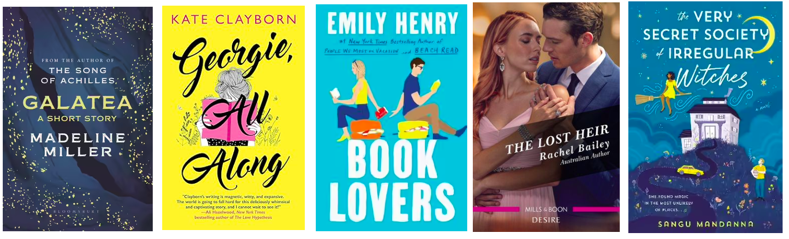
Meanwhile, throughout May, June and July, I managed to read 18 books. I won’t discuss them all but I will point out a few which stay on my mind. And I would stop reading now if you object to spoilers. Here are some pretty book covers to give you time to look away.
I tried to write this post in the depths of Autumn semester, when I rarely have time to spend time reading for pleasure nor much time to blog. I failed. Instead, I have finished it after the last week of classes.
Observation Note 117: Pain.I unwisely took on an overwhelmingly large teaching load in February. I had nothing offered to me in Spring semester last year, leaving me stuck doing some contract work in road safety education which is totally fine but not what I want to be doing. So when I found myself drowning in offers in February, I decided a heavy teaching load was fine as I was feeling strong and healthy in February (despite the plague having finally befallen me). I was fine until I literally fell off the end of my bed injuring my back. I lay on the floor for half an hour, unable to get up, with hubs away on a work trip and my son taking a long hot shower. I was calm but winded. I couldn’t call out and my phone was nowhere near me. When my son finally came through he freaked out, helped me into my bed, checked me for breaks, concussion etc. But in the end, we decided I was just winded. I limped and was bruised, I saw my doctor who agreed with me. I felt mostly fine until a fortnight later when I started the gargantuan task of marking 170 student essays and then my whole body went to pot. Sciatic pain I had never experienced on my right hand side took hold of my life and pierced me with spasms and continues to do so. Weeks later I injured my ribs while I was doing some gentle gardening, giving me more grief and the inability to breathe deeply. And then last week I injured my ankle just by standing up. No rolls, no trip over, nothing. Once again, I am off my feet, because of pain, but I can’t lie down because of my ribs, and I can’t sit because of the sciatic pain. Because life needs to come in threes when it hurts. I found that I could not sleep, mark, function, at all. So, with all that, there is little surprise that I only read two novels in April, and one text book on web usability which is set reading for my students. No surprises, I won’t be discussing the text book.
Along with being late posting my April books, I also have spoilers because when I am in pain, I have not filters. At all. You are warned. Look away. Especially for the schmoushy fab Harlequin I discuss in Reading Note 65 (I wanted to end on a happy note).
Reading Note 64: Raynor Winn’s The Salt Path. Let’s start with the blurb: Just days after Raynor learns that Moth, her husband of 32 years, is terminally ill, their home and livelihood is taken away. With nothing left and little time, they make the brave and impulsive decision to walk the 630 miles of the sea-swept South West Coast Path, from Somerset to Dorset, via Devon and Cornwall. They have almost no money for food or shelter and must carry only the essentials for survival on their backs as they live wild in the ancient, weathered landscape of cliffs, sea and sky. Yet through every step, every encounter, and every test along the way, their walk becomes a remarkable journey.
The Salt Path is an honest and life-affirming true story of coming to terms with grief and the healing power of the natural world. Ultimately, it is a portrayal of home, and how it can be lost, rebuilt, and rediscovered in the most unexpected ways.
For many of you who have been reading my blog for a long time, you will know how much I hate camping and the fact that Raynor Winn and her husband choose to camp wild while they walk the UK’s South West Coast Path when they were rendered bankrupt and homeless was nearly the worst nightmare possible for me (pipped to the post by the thought of plummeting to my fiery death on a plane though that would be quicker torture than camping, right?).
In my attempt to write a post every month addressing SuperWendy’s TBR Challenge, I am mentioning ever-so-briefly the one and only Unusual Historical I have read this year (in February). Having seen so many readers laud this book, I feel that I am an outlier. And a heads up – the blurb to this book is longer than my commentary.
Reading Note 63: India Holton’s The Wisteria Society of Lady Scoundrels.
A prim and proper lady thief must save her aunt from a crazed pirate and his dangerously charming henchman in this fantastical historical romance.
Cecilia Bassingwaite is the ideal Victorian lady. She’s also a thief. Like the other members of the Wisteria Society crime sorority, she flies around England drinking tea, blackmailing friends, and acquiring treasure by interesting means. Sure, she has a dark and traumatic past and an overbearing aunt, but all things considered, it’s a pleasant existence. Until the men show up.
Ned Lightbourne is a sometimes assassin who is smitten with Cecilia from the moment they meet. Unfortunately, that happens to be while he’s under direct orders to kill her. His employer, Captain Morvath, who possesses a gothic abbey bristling with cannons and an unbridled hate for the world, intends to rid England of all its presumptuous women, starting with the Wisteria Society. Ned has plans of his own. But both men have made one grave mistake. Never underestimate a woman.
When Morvath imperils the Wisteria Society, Cecilia is forced to team up with her handsome would-be assassin to save the women who raised her–hopefully proving, once and for all, that she’s as much of a scoundrel as the rest of them.
Sooooo….this paranormal historical romance novel was a rather unremarkable read for me. Floating houses, strong magic women, enemies, foes, lots of tea drinking and rules of decorum? I felt like I should have loved this book but instead I gave up after ten chapters (I think?) when a house lands in a field where Cecilia is sparring with love interest Ned Lightbourne. I skim read the rest. My biggest impression is that I had this book on my TBR since 2021. I feel let down by the nearly two year wait. I couldn’t lose myself in the story.
PS After I wrote the above paragraph, I thought I would return to my GoodReads entry and this is what I wrote:
I liked the concept, I liked the way the chapters were introduced, and it was rather clever however the cleverness overwhelmed the story and I ended up skimming the second half of the book. That said, I really liked the last chapter. Jolly library ending and all that.
I guess that I couldn’t even remember that I thought it tried for cleverness. This may have been its downfall. Oh and the romance….totally forgettable too. I gave it two Goodreads stars.
Being in the thick of Autumn Semester plummeted my recreational reading to a dismally low seven books (though during lockdown years, this would have been quite the achievement) across the month of March. This thick of it includes making time today to write this post despite having nearly 200 assessment submissions waiting for me to mark. So I will be quick!
Observation note 115:Moral to the story is “do not read books when you are overwhelmingly busy”. Of the seven books, I rated none of them above a 3.5/5 stars. At best, I was only partially engaged, and at worst, I was bored and annoyed. So why did I even bother to read the books? Well…they were all library reservations which I had waited for months upon months for them to arrive. They had all been on my TBR for a long time, and some of them I had deferred from borrowing several times, so I gave up and just borrowed them at a bad time instead. I realise this is due to my own reading baggage*. Despite knowing I was strapped for time, I persisted where I probably should not have. I think that I did most of the books a disservice. I hope to post about some of them in the next week or so (after marking has been completed). I have drafted notes for the other books I read in March but I will only discuss one in this post.
Reading Note 62: Richard Fidler’s The Book of Roads and Kingdoms.
The blurb: A lost imperial city, full of wonder and marvels. An empire that was the largest the world had ever seen, established with astonishing speed. A people obsessed with travel, knowledge and adventure.
When Richard Fidler came across the account of Ibn Fadlan – a tenth-century Arab diplomat who travelled all the way from Baghdad to the cold riverlands of modern-day Russia – he was struck by how modern his voice was, like that of a twenty-first century time-traveller dropped into a medieval wilderness. On further investigation, Fidler discovered this was just one of countless reports from Arab and Persian travellers of their adventures in medieval China, India, Africa and Byzantium. Put together, he saw these stories formed a crazy quilt picture of a lost world.
The Book of Roads & Kingdoms is the story of the medieval wanderers who travelled out to the edges of the known world during Islam’s fabled Golden Age; an era when the caliphs of Baghdad presided over a dominion greater than the Roman Empire at its peak, stretching from North Africa to India. Imperial Baghdad, founded as the ‘City of Peace’, quickly became the biggest and richest metropolis in the world. Standing atop one of the city’s four gates, its founder proclaimed: Here is the Tigris River, and nothing stands between it and China.
In a flourishing culture of science, literature and philosophy, the citizens of Baghdad were fascinated by the world and everything in it. Inspired by their Prophet’s commandment to seek knowledge all over the world, these traders, diplomats, soldiers and scientists left behind the cosmopolitan pleasures of Baghdad to venture by camel, horse and boat into the unknown. Those who returned from these distant foreign lands wrote accounts of their adventures, both realistic and fantastical – tales of wonder and horror and delight.
Fidler expertly weaves together these beautiful and thrilling pictures of a dazzling lost world with the story of an empire’s rise and utterly devastating fall.
Way back in the Before Times, I named Fidler’s Ghost Empire (Reading Note 10) not only as my favourite book of 2019 but in my Top 10 books of all time. Richard Fidler is a radio presenter on the Australian public broadcaster ABC where he conducts these sublime hour-long interviews with relatively unknown but incredible people (on the rare occasion he will interview someone famous but only if they are amazing like his interview with Angela Lansbury). A few weeks earlier, a friend of mine asked me who would I invite to my ideal dinner party and Fidler was on my very short list. So when I heard that he would be the first author at my local (and reknowned) bowling club’s new monthly book group (interview with an author), I grabbed my friend Monica and I was there with bells on!
Unlike the last three months, my reading has slowed down as I am back at work and prepping for the teaching semester. However, I still managed to read (nearly) 18 books, including two books which I DNF’d – I am going to argue that reading more than 25% of a super long book counts, especially as I had to tolerate reading a book that already is boring or annoying me. Notable books which I won’t go into detail include Lea Ypi’s Free: A Child and a Country at the End of the World on living through the Albanian shift from socialism to the “free market”, David Sedaris’s Happy-Go-Lucky with a fresh series of essays including the essays on his difficult father’s death, and only one reread – Lauren Layne’s Walk of Shame which continues to be delightful and flighty reading fun. So here are my favourite five starred books for this month:
Reading Note 58: Emily Henry’s Book Lovers. I didn’t know what to expect from this book. I hadn’t read the blurb before I picked it up, and I usually avoid books with bookaholic characters (LOL – so much for readers wanting to see themselves represented in books). Nora Stephens is an urbanite. She loves her city, she loves her job, and she is not one to go on holidays. She has this small problem with (ex)boyfriends who all seem toleave her for women who live in small-towns and she is not a fan of small-town romances. However, her pregnant, younger sister Libby (named for the library app perhaps?) coerces her to spend a month in a small-town which is where her sister’s favourite book was set. Annoyed but loyal to a T, Nora agrees and joins her sister. The irony is that she keeps bumping into Charlie Lastra, an editor she knows from New York City. The story unfolds beautifully. Nora is revealed as being still-waters-run-deep, and has so many levels of worries and anxieties. I love the way that she and Charlie found commonalities in their life aims but also stuck to their own convictions, until the end moment (no spoilers but I did like the ending).
This book does get a bit meta with its mentioning of popular culture and book trope, yet it is done comfortably and the mentions fit the narrative well. Far from being clever add ins, they moved the story forward, and gave it richness. I would definitely reread this book and I certainly recommend it.
I’ve had a busy month of reading – 30 books – a book a day except for the book I was reading on 31st – I was at the 60% mark but the working year has finally kicked in and I was too busy writing workerly things to be able to finish. It has been an odd two months, as I have had no work yet I have been negotiating new teaching contracts in the in-between times. In the next few weeks, I will be going from relax-á-vous to hectic again. I will cherish the past few months of reading constantly. An opportunity I doubt I will re-experience for a long time. Meanwhile, here are my favourites from January:
Reading Note 52: Jeremiah Moss’s Feral City: On Finding Liberation in Lockdown New York. A memoir and observation of New York City once the privileged and rich fled, leaving behind those who couldn’t and those who didn’t want to leave their home. Moss explores his city in 2020 on his bike, through protests marches, with shared music and community, as the hidden and marginalised emerge from their homes to fill the void left by the “hyper-normals”. He writes about the symbolic violence “that moves through normativity, deployed through sudden movements, a certain walk, a flick of the eyes, a smirk”. He describes the smirk as a splinter biting skin, one of those invisible filament you feel but can’t quite see, a fibre of glass. The smirk is contempt, the hallmark micro-expression of hyper-normativity, it is a doing, and we are the done to”. Though Moss is discussing the contempt of a “normal” passing him by, his words cut deep into my thoughts as they clearly explain my own dislike of the “smirk” which I had not been able to articulate as clearly as Moss does. This was a striking book examining power and queerness and community in the face of pandemics and oppression. It certainly makes you question the “return to normal” push.
Reading Note 53: Mark Mazower’s Salonica, City of Ghosts: Christians, Muslims and Jews: 1430-1950. A long history of the multicultural, polylinguistic and polyethnic city and its changes over the centuries to a city that is unrecognisable from even a century earlier. Maxower writes in his introduction that “Change is, of course, the essence of urban life and no successful city remains a museum to its own past”. The homogenisation of this cosmopolitan city is slowly unravelled by a compelling narrative. A week later, I am still smarting and feeling the grief of the Great Catastrophe, with the awful consequences of the population swap of Turkish and Greek people, forced from their ancestral land, It doesn’t escape me that today is the 100 year commemoration of this devastating period in history which continues to have reverberations across the world. Following this was the devastation resulting from the German occupation in World War II and their eradication of the Jewish citizens of Salonica. This was a sombre read, and I will definitely be seeking out more books to read by Mark Mazower.
Reading Note 54: Sabina Hahn’s Pineapple Princess is a funny, glamorous, tasty, bug-filled picture-book with sass and delight. I love this story. Buy it for your kids, your friends’ kids, your libraries and your storytimes.
Reading Note 56: Amanda Montell’s Cultish: The Language of Fanaticism explores the language that is used by cults – from fringe religious sects to yoga and exercise crazes and the cult of retail. Montell focuses upon the power of language used to entice and compel people into cults. Montell also provides the tools of understanding the difference between a fad, a religious groups and the cray-cray. I listened to this on audiobook with my husband and we were constantly stopping it to examine our own response to charismatic people, as well as thinking about the people we know who sadly have been consumed by organisations and movements that mimic cults, causing them harm and by default, causing harm to their loved ones.
Reading Note 57: Lana del Rey’s Violet Bent Backwards Over the Grass is a beautifully produced audiobook of del Rey narrating her poetry. Just play it on auto-loop. It is wonderful.
A belated Happy New Year to you all. My plan had been to post this list early in January, but the weather was lovely and we were on summer holidays and frankly swimming and visiting came ahead of writing. And then, a week ago, after three years of hiding, lockdowns, isolations, vaccinations, masking up and going out, I was finally felled by the plague. Covid hit me early on Tuesday morning and it was painful and sudden, with all the expectant symptoms. Due to having been hospitalised in August of last year with RSV (ambulance dash to the resuscitation unit at my local hospital and an ensuing protracted illness and recovery) meant I was on the high risk list and I received antivirals within a few hours of testing positive and I have been bed bound and isolating ever since. The meds have worked, I am still isolating so I have turned my time into writing for the blog, and gratefully I tested negative just yesterday.
Up until late October of 2022, my reading continued to be fractured and interrupted by life and all its oddities, however, in late October, I felt like my pre-PhD, pre-uni reading mojo was back, having read 70 books from November onwards – over double for the rest of the year. And that reading mojo also had me giving 5 stars to 25 books – a quarter of all I read! I think it is a bit much to go into depth with all 25 books (though 11 of those were picture books), I will have a brief description of my absolute favourites and only list the rest.
This was such a deep, slow burn of a romance. A flirty, confident heroine, with an awkward foot-in-mouth nerdy hero (who doesn’t turn into a swan). I loved who thoughtfully the main protagonists in this story grew and developed throughout this story. The hero John Modesto-Whitford is a serious man not taken to having fun, serious about his public defender job, serious about not allowing his rich father contribute to his life. He presents as boring but still-waters-run-deep and this man… ““John was being active. Inside the walls of this crumbling but noble building, he was never passive. He was doing something about that complicated world. Each hour of concentration he lent to his cases he was making the world a more just, fair place.” ….this man is a fair man. Just swoon.
Love and Other Puzzles by Kimberley Allsopp.
What an absolute delightful book. I loved the way it was written, the protagonist’s cheeky, clear eyed voice, it was just fun. It was more chick-lit than romance, Rory is devoted to her rigid routines, judges life by the rom-com openings they reflect, and how well they reflect them, and doesn’t really cope when things are out of place. Until she decides that she needs to break her routine so she allows the clues in the New York Times crossword puzzles dictate her life decisions. In the space of a week, her life is changed. I loved it.
Non-fiction
Inheritance: A Memoir of Genealogy, Paternity, and Love – Dani Shapiro
Invisible Women: Data Bias in a World Designed for Men by Caroline Criado Pérez
Phosphorescence: On Awe, Wonder and Things That Sustain You When the World Goes Dark by Julia Baird
Fierce Attachments by Vivian Gornick
A City is Not a Computer by Shannon Mattern
The Crane Wife: A Memoir in Essays by C.J. Hauser
Best of the Non-fiction Best:
Phosphorescence: On Awe, Wonder and Things That Sustain You When the World Goes Dark by Julia Baird. An Australian author, journalist exploring the world of phosphorescence and how to find our own internal light. This book worked for me but I think it did this because I was in an unusual headspace even for myself. I read it only a few weeks after my hospitalisation and it spoke to that darkest part of ourselves, especially as I had stopped breathing on two occasions and it was difficult to comprehend the severity of what I was experiencing. This book made me consider how I think about things that give me awe.
Some of quotes that I felt deeply included “Keep in mind that the most important quality in a person is goodness” and “Don’t make the mistake of dismissing decency as dullness” (p. 139) Especially that last one, oh the amount of women I have known who craved the “bad boy” for romance and mistreated the decent man as dull. It always angered me.
“It might take you decades to speak up about things that matter to you, but, being able to speak your truth is a vital part of being human, of walking with certainty and openness on the earth, and refusing to be afraid. Once you have found your voice, you must resist every person who will tell you to bury or bottle it.” (p. 151). This quote stung me. I felt much more outspoken prior to my PhD and somehow, I find that 2 years later, I still haven’t got my voice back. I have stopped trying to get it back too. I hope with time it will come back.
Picture Books
Stacey’s Remearkable books by Stacey Abrams
When Molly Ate the Stars Joyce Hesselberth
The Octopus Escapes by Maile Meloy
Blankie by Ben Clanton
Julián is a Mermaid by Jessica Love
I love you like by Lisa Swerling
Moonlight by Stephen Savage
The Perfect Tree by Corinne Demas
If You Were A City by Kyo Maclear
It Had To Be You by Loryn Brantz
Prince & Knight by Daniel Haack
Best of the Picture book Best:
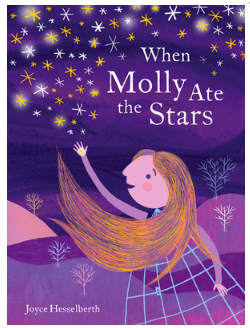
When Molly Ate The Stars by Joyce Hesselberth was slow, bright, starry, delightful and light. It had an ethereal sense to it that just made me happy.
Blankie by Ben Clanton is a board book with rhythms and humour. It would just be delightful fun to read to a toddler.
Weirdest Book
Upright Women Wanted by Sarah Gailey
Bat-shit-crazy
gunslinging
anti-fascist
lesbian librarians
in a futuristic dystopian American West.
Like, I really don’t think I need to describe it any further.
This is a must read.
Just for the cray-cray.
The Best What-the-fuck-did-I-just-read book of the year
And just because I feel I need to make a comment…I did read a Lynne Graham novel this year and yes it made me happy and made me laugh.But I have comments!
Promoted to the Greek’s Wife: An Uplifting International Romance by Lynne Graham
Let’s start with the novel. It was the usual angsty Graham novel which engages in love, romance, rich entitled men and poor waifish women who get the hots with each other while they jetset around the world while navigating the difficulties of unconventional families. Heroine Cleo, billionaire hero Ari, work romance (though they call it before it gets unethical – Lynne’s gone woke!). Lots of tension. Lots of foster kids, lots of social issues and lots of love. This book was fun and I really enjoyed it.
However, there is a particularly large elephant in the room. That large elephant is the subtitle.
An uplifting International Romance.
AN UPLIFTING INTERNATIONAL ROMANCE!
AN UPLIFTING INTERNATIONAL ROMANCE?????
SERIOUSLY!?
I had to check my book cover. Had I accidently picked up an Inspirational romance? Has Lynne Graham stopped writing Sexy’s?
What is happening?
This is not my Mills & Boon and I really don’t like it.
Inspirational kiss my big fat Greek-Australian arse!
This book was many things but it was not uplifting and it certainly wasn’t inspirational. But it definitely was fun.
Observation Note 112: Starting over. As I do every January, I start out with a post of my favourite books. But this year, that post is running late so instead, I’m going to mess with the natural order of things and do my first post on SuperWendy’s TBR reading challenge. Last year, I only managed to post in the first half of the year. However, let’s just say I was busier reading than writing. I did manage to read through a big chunk of my TBR which is my ass-backwards way of kicking off on the theme of Starting Over. Well….let me tell you how I took charge of my 220 TBR waiting-to-read books that had accumulated on my Goodreads over the 10 years I have been documenting my reading habits…
Observation Note 113: Looking back. So let’s start in November, I was heading to the Blue Mountains a few hours west of Sydney for an academic writer’s retreat where I was going to try to be scholarly and thinkerly (true word). I was being driven by a friend in what I would call a white-knuckle drive on a Friday afternoon crazy Sydney motorway weekend exit frenzy, when I saw a friend contacted me via Twitter (yes – I am still there and happy to accept the side-eyes) to tell me that Queens Public Library in New York City had an overseas non-US citizens membership availability. For US$50, I got to subscribe to the most incredible elibrary. So I paid and added that sweet library to my Libby app for I now had some procrastinating reading to do rather than writing.
Have I been reading a book a day for the past three months. I sure have! Have I been reading in bed? Yes I have. Have I been reading instead of watching TV. Damn yes! Have I been reading instead of swimming. Ummm….no. Even I have reading boundaries. I can’t read when the harbour view is astounding!
Well…my list has gone from 221 books to 121. 100 books are off my TBR. Of those 100, I have read 44, I have another 12 on hold, and another 44 which were reassessed off the TBR list – some due to sampling the first few chapters and finding I was no longer interested, and others just deleting as I couldn’t work out why or when I had added them. Of course, in the last week, I accidentally added another 10 to my TBR want-to-read list but I am not counting them here. Also, no book cover pics – I hate this wordpress layout. It makes adding images a nightmare.
So now for some of the more notable books I read:
Reading note 47: The Longest Wait
The Trouble with Joe by Emilie Richards.
I added this book, published in 1994, on the 29th of September, 2012 and read it on the 17th of November, 2022. A 10 year, 2 month wait. I have read and kept several Emilie Richards category romances from the 1990s so I was familiar with the calibre of the authors writing. She usually grapples with issues of the self, overcoming problems not necessarily of love, but of pressures that society can bring to a couple. The love between the protagonists is undeniable, however they are grappling with Joe’s infertility problems. Joe’s wife Samantha is a teacher and she has a neglected child, Corey, in her class. Over the summer holidays, the two of them find themselves as foster carers for Corey, unravelling a lot of emotions around what it means to be parents, have family, responsibility, love and neglect. This is the only romance I recall reading which also gives the child’s point of view and it adds such depth to the story. It was well worth the 10 year wait to read it.
Reading Note 48: The Best Wait.
Cara Bastone. About two years ago, in a catch-up conversation with Jayashree Kamblé, she recommended to me to try and find some Cara Bastone books to read. There were none in any of Sydney’s library systems so I left the recommendation hanging in the TBR. So I was delighted to find 3 of Bastone’s books at Queens Library: When We First Met, Can’t Help Falling and Flirting with Forever. All three novels had these fully fleshed, deeply understandable characters – not only the main protagonists but all their neighbours and friends and colleagues. The setting felt known and lived in, well understood, I felt like I could smell the air of the city through her writing. And the relationships, well they too were these nuanced courtship tales, thoughtful of differences and the tensions that can bring people together. I particularly loved the hero from Flirting with Forever. In the opening scene of the book, he comes across as awkward and thoughtless but as the book unfolds, you discover a deeply thoughtful, principled man with grace and reason. I highly recommend you seek out Cara Baston’s books.
Reading Note 49: Most Annoying Wait.
To Sir With Love by Lauren Lane – I cannot tell you how frustrated I’ve been with my public library where I had a long-standing purchase request with them for this book in 2021. It was finally satisfied 14 months after I placed the request, so my reserve on the request expired and it got borrowed by other people and I had another 3 month wait and I was just furious and annoyed and I just didn’t bother going and it was so much more pleasurable reading it online. 14 months wait and a shitty reservations system – just do better, Sydney.
Reading Note 50: Yeah books from the TBR.
Some of my reading highlights from the last three months.
Blended by Sharon Draper. This was on my TBR since 2018. A children’s novel about mixed race young girl dealing with her divorced parents and her difficult experience. This is a book about seeking your belonging, grappling with your parents custody issues, the concept of home, and how race and identity can differ depending upon which parent you are with. A good read.
Accidentally Engaged by Farah Heron. This is one my favourite books for this year so I won’t write too much about it on this post as I still plan to do a 2022 post in the next few days. Basically, this is fun, family dynamics, Tanzanian-Gujurati-British-Canadian migrant story, lots of food, lots of cultural expectations and cultural pushback all set in lovely Canada. A great read.
Anne of Manhattan by Brina Staler. Thoroughly Modern 21st century fanfiction of Anne of Green Gables as young adults living in Manhattan. It’s well-written and I really liked the book. The author definitely captured the (kindred) spirit of of Anne and Gilbert and their connection though it had quite a different plot trajectory. Well worth the two year wait to read it.
Invisible Women: Data Bias in a World Designed for Men by Caroline Criado Pérez. I wrote about this book in my previous post (Reading Note 46).
Tweet Cute by Emma Lord. A YA/teenage romance conducted across several social media platforms as well as being set in a New York high school. The usual teen coming of age issues compounded by pressures from parents especially around insisting their older teens making corporate social media decisions. It was complex, it was good, I really liked it. Well worth waiting to read it since 2019.
The Lonely City: Adventures in the Art of Being Alone by Olivia Laing. A memoir reflecting on the loneliness of the city, seeking connections and not finding them, the impact of the AIDS crisis, and how artists such as Andy Warhol and Edward Hopper grappled with their own loneliness. Impactful and wonderful. Another well worth waiting for since 2019.
Reading Note 51: Meh books from the TBR.
I am so far from the zeitgeist on these ones. Many of them are lauded as “hits” and “must-read” stars of booktok and romancetok. If this is the future of romance fiction, I will cry.
The Roommate by Rosie Danan. Bleh. Call me a prude. Porn hero was boring. The plot was inane (seriously – the heroine leaves her city to keep a low profile and then hooks up with a high profile porn star just doesn’t make sense) and there was zero tension. Just. waffle.
Below Zero by Ali Hazelwood. Double Bleh. I totally cannot stand the “smart” heroine romance trend. Let’s face it. All these STEM heroines are just another iteration of targeted career-girl romance novels. And this one – well the heroine may have had a high IQ but she was definitely lacking in emotional intelligence. Imagine cracking onto your research project’s interviewee IN HIS WORKPLACE! That’s is serious misconduct. Not sexy. A breach of work health and safety too. Just no.
Corner Office Confessions by Cynthia St. Aubin. Great title. The story didn’t grab me.
Dial A for Aunties by Jesse Sutanto. SPOILER ALERT FOR THIS ONE. Everyone raves about this book as being hilarious and great and I will admit that it started out that way – just super super funny and cheeky. But then the main character Meddelin accidently kills her date (who was catfished by her mother!) and rather than call emergency services, get him to a hospital, go to the police, etc., like a normal person would, she shoves him in the boot, takes him to her aunts where they hide him in a freezer and all of a sudden I am reading horror murder meets Weekend at Bernies. I know that I should be able to overlook all the problems in this book and haha have a laugh but IT WAS GHOULISH! A (fictional) person died. Someone has to care. Someone has to pay. And they didn’t. And I just couldn’t. Just say no!
The Wedding Party by Jasmine Guillory. Look, the premise was great – I do love a hook-up becomes lurvvve story and Guillory writes some lovely witty repartee but she substitutes way too much food in her novels for her lack of sexy times. Unlike Farah Heron’s book, the food is a prop in this novel, it beefs up the novel (sorry, not sorry) but it doesn’t further the plot. Not that books need detailed sex, but good god – that constant eating annoyed me. Waiting since February 2019.
The Two Lives of Lydia Bird by Josie Silver. A sliding doors story. Great premise, ho-hum delivery. It didn’t do it for me. Waiting since January 2020.
Time is a Mother by Ocean Vuoung. Listening to the audio narration also by Vuong was the wrong thing for me. Whispered wistful poetry is totally not my thing. I couldn’t bear it but I persisted to the end. Perhaps I would have liked the poetry better if I had just read the text, but now the poet’s voice is in my head and it won’t work for me. Suited to a whole different type of person. Frustrated at the anticipation of waiting since 2019 for On Earth We’re Briefly Gorgeous but opting for the 2022 publication instead due to availability.
Moral to the story is: stick with the book you have already listed on the TBR
Observation Note 114: In conclusion.
I feel so pleased with my overhaul of my TBR. I am so happy that Queens library membership has slayed my seven year reading slump, and I will definitely be renewing it for as long as it is offered to non-US citizens.
As for my procrastination during my writing retreat…it was a successful enough attempt at being “scholarly” that it kickstarted my re-engagement with a journal article which had been accepted pending revisions which I hadn’t completed for many different reasons. I managed to finish it and submit it a month later. I think the deep diving into the TBR reading probably energised me as much as the retreat, if not more so. Thanks, Super Wendy!
Observation note 111:I’m an avid reader. I reached a personal milestone this weekend. I have read 2500 books since I started keeping my own digital reading records. Starting on WeRead from 2008, then migrating my data over to Goodreads in 2012 where I joined many of my other bookish friends (this probably coincides with my ceasing to post my reading choices on FB). This is the only social media platform I use consistently, facilitating nearly a decade and a half of record keeping – the habits of avid readers!
Diligently adding information to my digital reading record grew out of my readers’ advisory practices as a librarian. My access to my library records prior to using these book sites provided only a partial snapshot of my reading as it didn’t include the books I was buying and reading outside of the library. The books I found myself buying also informed me as to the biases in library collections.
Keeping track of my reading has always helped me in my workplace in understanding user behaviours and anticipating reading requirements, especially during my time as a team leader at the City of Sydney where I was coordinating up to 7 storytimes a week for the various childcare centres in Ultimo (separately from the children’s programming) which explains the “library-storytime” tag (143 books) where I was assessing picture books for performance suitability. But even once I stopped working in libraries, I couldn’t stop the record keeping. You can take the librarian out of the library, and all that.
Now for some statistics: My year for the most books read was in 2012 – 365 books. My year for the least books read was 2013 – 26 books. The years I spent studying deeply impacted my book reading outputs, especially as many of those years I was working in two jobs, along with studying, along with general family and home responsibilities. Reading opportunities in those years became treats and luxuries, though the list would be off the scales if I was able to count journal articles on GoodReads!
I have approximately 580 subject tags “shelves”, though my early records don’t have many tags, my later ones are rich with description – this practice emerged as the digital world became more sophisticated. Folksonomic categorisation rather than taxonomic predetermined ordering systems FTW! My highest read genre is romance fiction (814), picture books (599), non-fiction (589). I love that along standard tags such as “graphic novel” (64 books), “historical fiction” (86 books), I get to created my own descriptors and some of the more esoteric ones are “bat shit crazy” (10 books), “fake name trickery” (23 books), “yeeha cowboy” (27 books) and “hatch-back hero” (a pathetic 2 books). I even have a “vassiliki” tag for books with characters who have my name (5 books).
Reading Note 46:Furious fury. For the record, my 2500th book was Caroline Criado Perez’s Invisible Women: Data Bias in a World Designed for Men. Added to my TBR in March 2019. It’s on the obfuscation of women from data collection and its deep life and historic impacts. It made me incredibly angry at the extent that womens’ lives continue to be marginalised from health, education, road safety, employment and every day life opportunities. Men continue to be the default at the expense of women’s lives. I think this book should be a must read for everyone, especially policy and decision makers.






 Shallowreader